Cotton House: a quiet Barcelona place you only share with your own
There are places in Barcelona that locals do not actively promote. Cotton House is one of them.

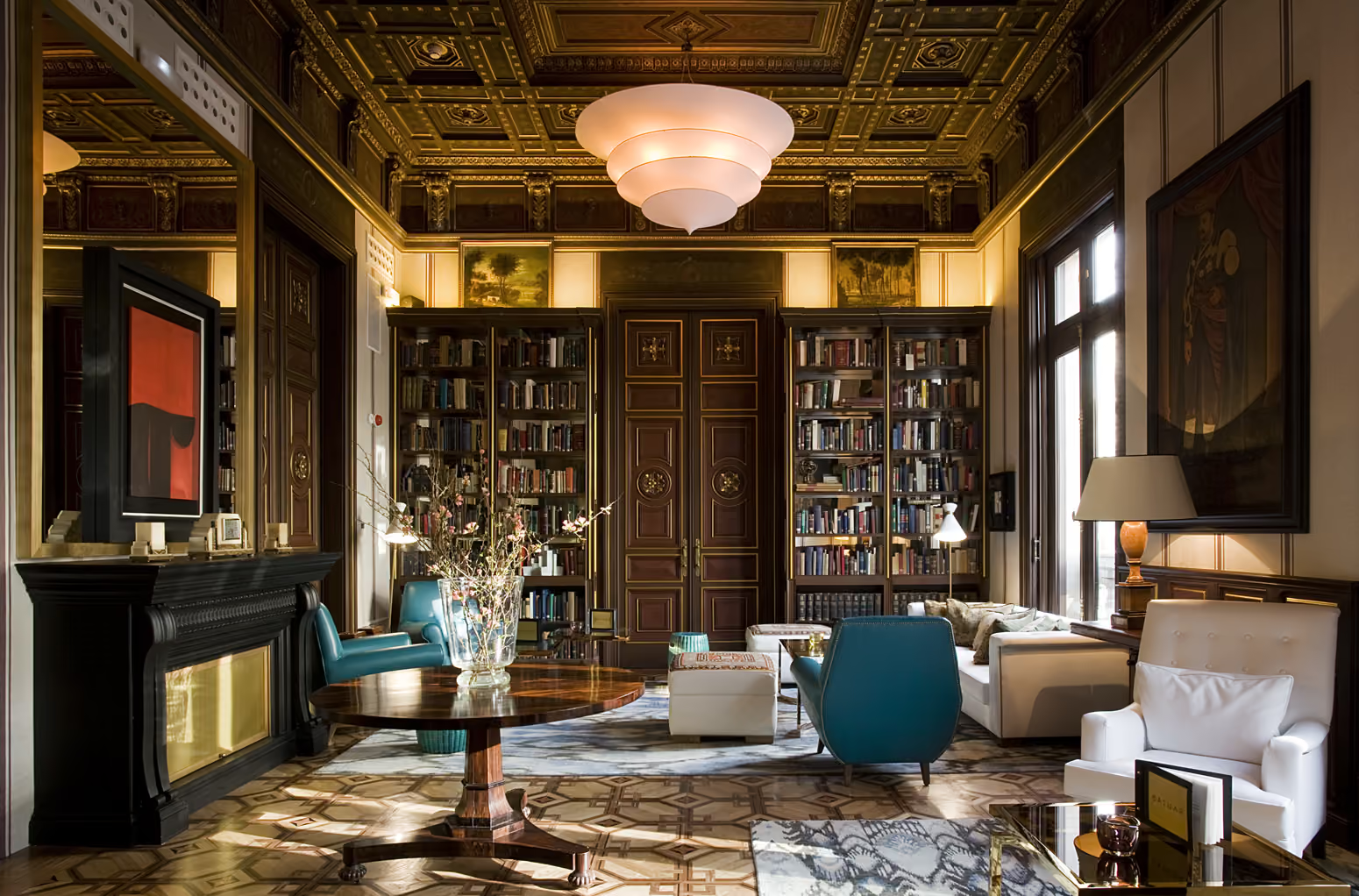
Cotton House is one of them. A beautiful building, a calm atmosphere, and almost always an available table on the terrace or in the restaurant.
From a design perspective, it is also a strong example of how to work with history through careful renovation rather than replacement.
1. Act one: architecture, history, and identity
The building
The mansion was built in 1879 by architect Elies Rogent, a key figure of Catalan historicism. It emerged during a time when the textile industry defined the local economy, which shaped both its scale and character.
Historical layers
Cotton House has moved through several distinct phases:
- 19th century: a private residence of a textile industrialist
- 1957: headquarters of the Cotton Guild, when the iconic suspended spiral staircase was introduced
- 2015: transformation into a five-star hotel
The history is not hidden beneath renovation. It is visible in transitions, materials, and preserved architectural elements.
Interior character
The space feels more like an elegant private residence than a hotel. Its style can be described as:
- A blend of neoclassicism and European eclecticism
- A soft, club-like atmosphere
- Honest materials
- A restrained, интеллигентная color palette translated into calm, balanced tones
Nothing is loud or attention-seeking. The interior is composed, warm, and intentional.
Furniture and detailing
The strength of Cotton House lies in how elements are layered:
- Wood paneling
- Brass and metal accents
- Vintage armchairs combined with contemporary pieces
- Rich textile textures
- Preserved door portals and parquet flooring
- Soft, diffused lighting
The composition is calm and free of visual noise. It does not try to impress—it creates the right emotional tone.
Cotton Library: respect for history
One of the most understated spaces is the Cotton Library. Many guests overlook it, yet it contains real cotton samples, archival materials, and documents from the textile guild.
This is not decorative storytelling. It is authentic content embedded into the space. Decisions like this make the hotel not just aesthetically pleasing, but meaningful.
2. Act two: renovation and design approach
The designer
The renovation was led by Lázaro Rosa-Violán, one of the most recognized designers in Catalonia. His work is defined by the ability to integrate contemporary elements into historical contexts without tension.
Project reference: https://lazarorosaviolan.com/allprojects/cotton-house/
Core design decisions
Preservation of original elements - Stucco, staircases, parquet, and doors were retained wherever possible. This is the most complex path, as historic structures rarely align with modern technical requirements.
Careful integration of new elements - Contemporary furniture with classical proportions, warm lighting, restrained textiles, and smooth color transitions were introduced without disrupting the atmosphere.
Spatial clarity and openness - Historic buildings are often dark and dense. Here, passages were opened, visual axes established, and the space was allowed to breathe. The result feels light and livable rather than museum-like.
Balancing time periods - This is a delicate equilibrium. Too historical—and it becomes static. Too modern—and the identity is lost. Cotton House achieves a precise balance where past and present coexist naturally.
Final insight
Cotton House demonstrates how history can be preserved without turning an interior into something heavy or theatrical. It is a calm, refined space in the center of Barcelona—one people return to, and one that is usually shared only with those who truly appreciate it.